
Mexico: Taco's, Tequila and Temples
- 7 dec 2016
- 5 minuten om te lezen

















For the first time this year, we left the United States to explore the neighborhood. It was time to go to Mexico!
Since the Northern area's of the country are said to be not safe for tourists, we stayed on the Yucatan peninsula. Here you'll find beautiful mayan cities hidden in the jungle, deep lush cenotes, caves and the blue Caribbean sea. We stayed in the town of Playa del Carmen, just South of Cancun. Not exactly a quiet town, with tourist shops, restaurants, bars, clubs and many many resorts. But a good place to stay and see the other parts of the Peninsula from. It is possible (and relatively safe) to rent a car and see the sights on your own, but it is also very comfortable to travel by ADO bus or to book an excursion.
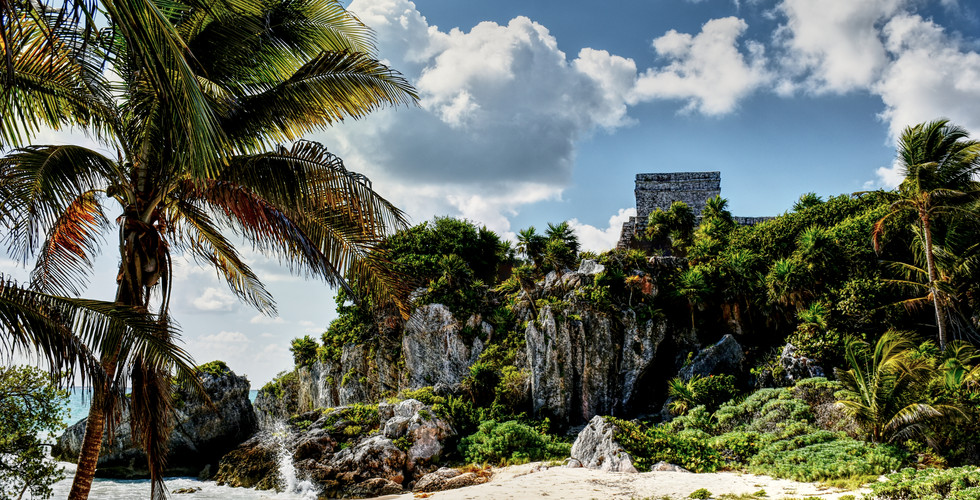
We took a bus to our first destination outside Playa del Carmen. It takes about one hour (while leaning back in your comfortable chair, watching a Spanish movie) to reach the hippy town of Tulum. It has some nice bars and restaurants, but it's greatest attraction are the Tulum ruins. Famous for the breathtaking location on steep cliffs, looking over the bluest sea. And for Assassin's Creed Black Flag (I wanted to climb the damn stones the whole time!)...The ruins, yes those stones, are relatively small and not the most interesting ones in the Yucatan. But it is a must-see for the location alone. You can walk around yourself (bring plenty of water and sunblock) or hire a guide at the entrance.
Better ruins can be found at nearby Coba, once a city greater than Mexico's capital today. Now only 5% of the ruins are properly excavated and open to the public. Still it takes you roughly half an hour to walk from the entrance to the last building, so it is a good idea to rent a bike (go Dutchies).
The main attraction is the pyramid of Nohoch Mul. You are still, famously, allowed to climb to the top, it is steep and hot, but the views are worth it.
There is also an ancient ball court, a smaller pyramid, a governors villa and a temple visible along the route.
We went to Coba with AllTournative (by bus is also possible, but they only go to Coba a couple of times a day). Our guide told us that this city got deserted (and so many others) for a very familiar reason: climate change, caused by overproduction and exhaustion of available natural resources. People stopped trusting their leaders, who predicted rainfall and sunrises, after severe flooding and droughts. They left for better lands and governments (sounds so familiar).
The Spaniards, arriving in 1519, therefore at first found a deserted world with no riches at all. It was very easy for Cortes to reach Tenochtitlan (now Mexico City) also because the Mayan people believed that every 52 years Quetzacatl (or Kukulkan), the Snake deity, would arrive on Earth. When it didn't happen, they would start over their calendar and built new temples over the old ones. But this time, it did happen. Cortes was a strange man in their eyes, with a big dark beard, riding on an evil looking creature, with steal weapons. They treated him as a God and could as well have escorted him to Tenochtitlan, which he took over in 1521.
To go back to the Mayan calendar: there were 20 days in a month. So the year had 18 months plus one month with only 5 days. The calendar is literally like a wheel, spin it 52 times (remember Kukulkan!) and you are back at the beginning. So it was never supposed to end at all.
Another city that already declined (though it wasn't deserted) at the arrival of the Spaniards, was Chichen Itza. About 15% has been excavated and is open to the public. The ruins are divided in several groups, based on architecture. There is, again, a ball court, an amazing astronomical watchtower, a temple of warriors, the skull platform and a sacred cenote.
The highlight of the city of Chichen, though, is one of the 7 (new) wonders of the world: El Castillo. A beautiful pyramid that not only shows great architecture, but mainly great engineering. When you stand in front of it and clap your hands, the echo sounds like a tropical bird. When the Summer solstice arrives, the light falls down the North side of the stairs in such a way that the shadows look like a giant snake (Kukulkan again, ladies and gents). Just amazing.
One hour from Chichen Itza is the city of Valladolid. A nice town to visit if you want to experience 'Mexico' without the resorts and the American sports bars. We had lunch at the charming El Meson del Marques (chili peppers filled with vegetables and cheese, yum!) and strolled around the central town square. They also have a small museum and a chocolate shop, which apparently is very good. But the heat just hold me back...
After visiting temples, pyramids and town squares in the hot and humid Mexican jungle, it is a great idea to look for a refreshing pool of water. The solution: the Cenotes, basically collapsed caves filled with rainwater. For the Mayan they were not only a source of drinking water, but also the connection to the underworld. A place similar to the biblical hell, but ruled by 12 gods and not only for the 'bad' souls. Everyone went to the 'court under the Earth' after death. Not surprisingly, they were treated as very spiritual places. There are hundreds of them on the Peninsula, and many are open to the public. Very close to Chichen Itza was our favorite one: the Yokdzonot, an open cenote. The locals there have created an eco-park, with a little restaurant and restrooms and the cenote is more than beautiful, it is basically the best swimming pool you will ever get to experience.
Another type of Cenote is the cavern. Here you have to rapell 17 meters down a dark hole before you reach (cold!) water. And you hear bats everywhere while you are floating on your tube in the water, but you don't see them...We got to experience this at the village of Pac Chen, where they built an adventure park for tourists. Besides rapelling down a dark Cenote, you can zip line over a lake with crocodiles (or so they say), walk through the jungle and canoe to a delicious local lunch. But, you are not allowed to take pictures. They have there own photographer....how modern *sigh*.
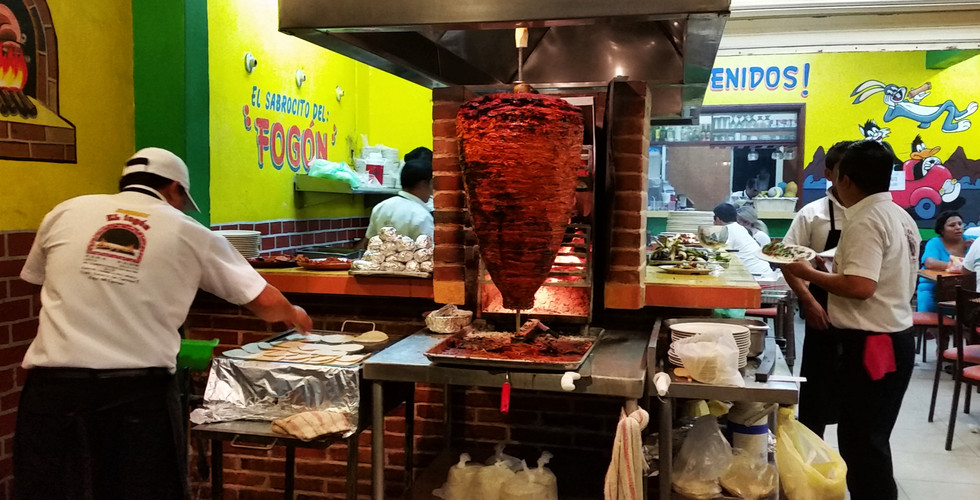
After all this culture and action it was time for one last night of great food. Something you won't find on Playa's Fifth Avenue. But there are good restaurants in Playa! El Fogon, for example, where you can get the most delicious taco's while sitting on plastic chairs on the street. And Kaxapa Factory, where they serve Venezuelan food. For our last night we went to Alux Restaurant and Bar. A restaurant literally inside a cavern Cenote! The ambiance is amazing, the food is fantastic. After dinner you are allowed to take a tour by yourself through the rest of the cave, which is all lit up in different colors. The best ending to a great vacation. Time to go back to the desert, and the Sonoran hotdog...!
Opmerkingen